By Dr. George Kaliaden
Senior Clinical Psychologist | www.psychologist.ae
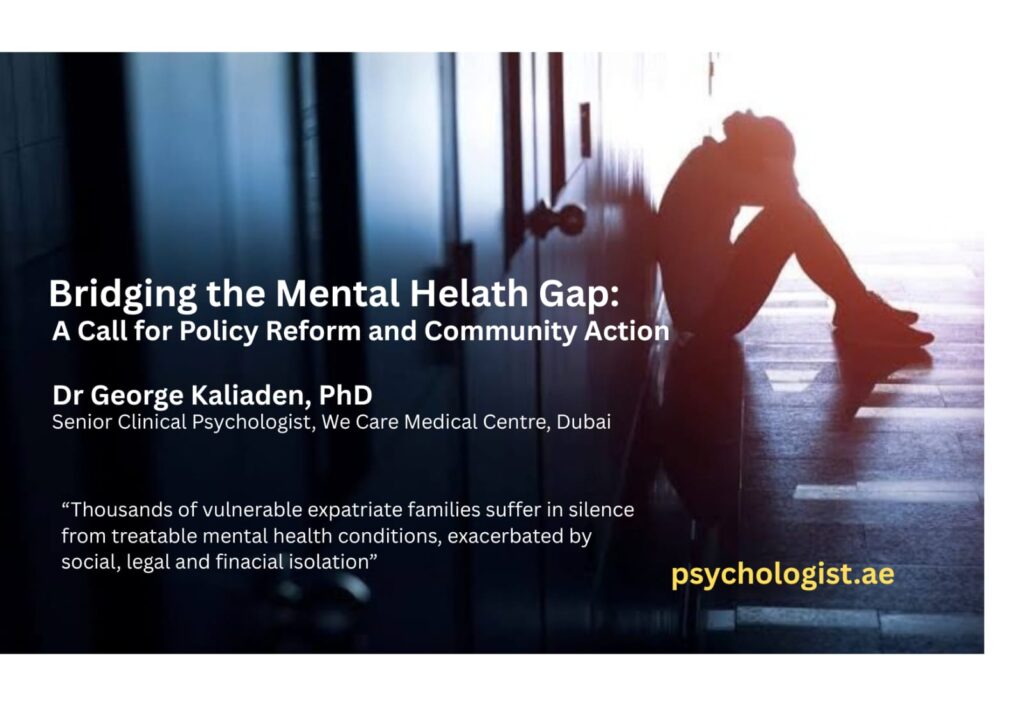
“Thousands of vulnerable expatriate families suffer in silence from treatable mental health conditions, severely exacerbated by social, legal, and financial isolation.”
Tomorrow, October 10, is the World Mental Health Day 2026. This year’s theme is :
“Lived Experiences Heard Real Voices, Real Change”. As a psychologist practicing
mainly with expatriate communities in Dubai for over 30 years, I wish to share some
of my thoughts in line with the World Health Organizations’ ongoing efforts to
improve mental health awareness and mental health services delivery systems
worldwide.
This week, late one evening, around 11:00 PM, I received an urgent message from a medical colleague: "Are you awake? There is an emergency. A friend of an associate is at high risk of suicide."
When I finally reached the individual over the phone, she was sitting alone in the
back of a taxi, consumed by overwhelming distress and desperate for an escape.
Over the course of an hour-long crisis intervention, she revealed a harrowing reality.
What began as an acute mental health crisis was deeply intertwined with systemic
socioeconomic strain: severe domestic abuse triggered by spousal alcohol
dependence, mounting debt, impounded passports, expired visas, and children
forced out of school due to unpaid fees.
Under the weight of these compounding pressures, she had walked out of her home
that night intent on ending her life.
Through therapeutic de-escalation and structured problem-solving, we were able to
shift her emotional state from severe crisis to a manageable, step-by-step action
plan. By helping her understand that both she and her husband were suffering from
treatable psychological conditions, we began mapping a path forward. She returned
home safely that night with a renewed sense of agency and a promise to engage in
ongoing support.
While this single story ended safely, it highlights a stark reality: thousands of
vulnerable expatriate families suffer in silence from treatable mental health
conditions, severely exacerbated by social, legal, and financial isolation.
The Invisible Crisis in Marginalized Populations
For high-income or well-insured populations, mental health support is readily
available. However, for low-income expatriates and families navigating informal
economies, psychological support is often a luxury far out of reach.
When mental health conditions go untreated:
Domestic and interpersonal conflicts escalate, often manifesting as domestic
violence, substance abuse, or self-harm.
Cognitive and problem-solving capacities deteriorate, leading to compounding
financial, legal, and familial miseries.
Emergency services and acute crisis channels become overburdened, stepping in
only when a situation reaches a critical or life-threatening threshold.
Mental health cannot be separated from broader socio-economic stability. To
prevent domestic crises and loss of life, we must fundamentally alter how
psychological care is accessed and delivered within underserved communities.
Strategic Recommendations for Policy Reform and Community Engagement
To address this systemic gap, a collaborative framework involving policymakers,
healthcare providers, and community organizations is urgently needed.
1. Integration of Mental Health into Essential Healthcare Frameworks
Mandatory Insurance Coverage: Basic health insurance plans must include
fundamental mental health and psychiatric coverage. Mental health care should be
recognized as an essential medical need, not an elective add-on.
Subsidized Clinical Services: Government health authorities and private clinic
networks should establish subsidized or sliding-scale psychological clinics tailored to
low-income residents.
2. Community-Based First Responder and Gatekeeper Training
Grassroots Crisis Networks: Social service agencies, community leaders, and
expatriate associations should be trained in basic mental health first aid (MHFA) to
identify early warning signs of severe depression, abuse, and suicidal ideation.
Hotlines and Crisis Support: Expand specialized, multi-lingual helpline services that
offer immediate, non-judgmental crisis intervention and referral pathways
.
3. Pro Bono Initiatives and Corporate Social Responsibility (CSR)
Mental Health Professional Mobilization: Professional associations should encourage
licensed psychologists and psychiatrists to dedicate pro bono hours or offer tiered-
fee structures for vulnerable individuals referred by recognized social welfare
organizations.
Public-Private Partnerships: Corporate CSR funds should be directed toward
underwriting community mental health programs, family counseling centers, and
distress funds for families facing socio-legal crises.
4. Holistic Multi-Agency Support Structures
Interdisciplinary Intervention: Mental health interventions must work hand-in-hand
with legal aid, educational charities, and social welfare groups. Treating
psychological trauma is far more effective when accompanied by support in resolving
underlying legal and financial stagnation.
Conclusion: A Shared Responsibility
The incident described is not an isolated event; it is a symptom of a broader gap in
our healthcare infrastructure. Mental health care should not be a privilege reserved
for those who can afford it—it is a fundamental necessity for maintaining the safety,
dignity, and stability of every family in our society.
By implementing compassionate policy reforms and fostering active community
participation, we can build a resilient safety net that reaches those in desperate need
before they reach a breaking point.
For more insights on mental health, community wellness, and psychological
services, visit www.psychologist.ae.